Nature-inclusive development: combine renewable energy with biodiversity
May 22 is the International Day of Biodiversity. Not for nothing, because worldwide ecosystems are under pressure due to the loss of variation in animals, plants and microorganisms. Climate change is increasingly leaving its mark, and the need to replace fossil fuels with green energy is also more urgent than ever. How can we connect these challenges and create synergy? This is where the concept of nature-inclusive solar and wind park
s comes in. In this blog, we dive deeper into what nature-inclusive development entails with Anna den Hartog, renewable energy consultant at GreenTrust, and how certain design choices can lead to the enhancement of nature. This blog is part of a series. In the next blog, we look at inspiring examples and the challenges of nature-inclusive design.
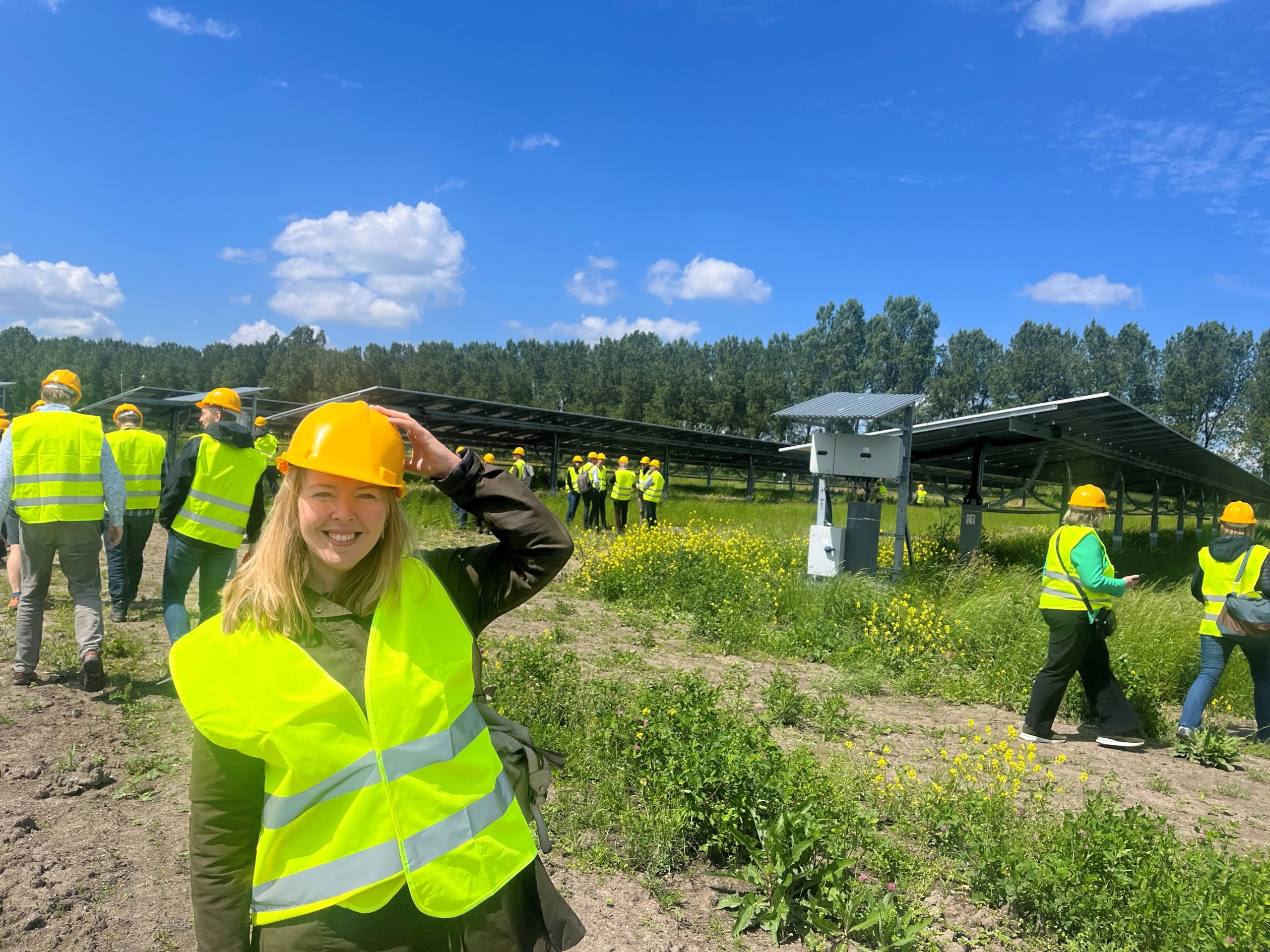
Why is nature-inclusive energy generation necessary?
“We live in a time when we face multiple challenges. In addition to a climate crisis, we also face a biodiversity crisis. More and more organizations, scientists and governments are sounding the alarm to draw attention to biodiversity loss. For example, the average population size of wildlife (such as mammals, birds, amphibians, reptiles and fish) worldwide has declined by as much as 73% since 1970, according to the World Wildlife Fund’s Living Planet Report (2024). And in the Netherlands, biodiversity has declined much faster and more sharply in the last century than in the rest of Europe, writes Natuurmonumenten. The situation is especially worrisome on Dutch land: since 1990, terrestrial animal populations have declined by 27%, especially in open nature areas (such as heathland and dunes) and agricultural areas. The number of species in open natural areas has even declined by 55%, CBS figures show. Allard van Leerdam, ecologist at Staatbosbeheer, endorses this and adds that animals on the land are mainly affected by agricultural work, poison and nitrogen. In addition, there is a lack of (clean) water due to low groundwater levels. This is partly caused by climate change and agricultural activities. In addition, we face global political power shifts that make the need for a sustainable, local, independent energy system even greater. And at the same time, we are experiencing the growing pains of energy transition: grid congestion and lack of space.
GreenTrust consciously chooses nature-inclusive design. We see opportunities here to encourage biodiversity, to offer green, locally generated power and also to use land use multifunctionally. Renewable energy parks provide a quiet protected environment. There are no cars driving, no CO2 or nitrogen emissions, and no tractors or other disturbances. In addition, we are often required, for the safety of energy parks, to put fences around the park which reduces disturbance to vegetation and allows land animals to settle in properly. This makes the combination of “energy generation and nature restoration” quite possible.
There is plenty of research showing that biodiversity can flourish in renewable energy parks. For example, Wageningen Environmental Research (WUR) studied 25 Dutch solar parks and found that biodiversity can indeed increase, especially when management is focused on nature restoration. In particular, mowing and removing grass clippings lowers soil nutrient levels, allowing more plant species to grow. The highest biodiversity was measured in parks that used this management. The University of Groningen is conducting a large-scale, five-year study of the ecological effects of solar parks on soil, vegetation, insects, mammals and birds. The goal is to determine how best to design and manage solar parks to promote biodiversity. The first results are expected soon, but the study already confirms that solar parks offer opportunities for nature gain, provided they are designed in an ecologically responsible way.
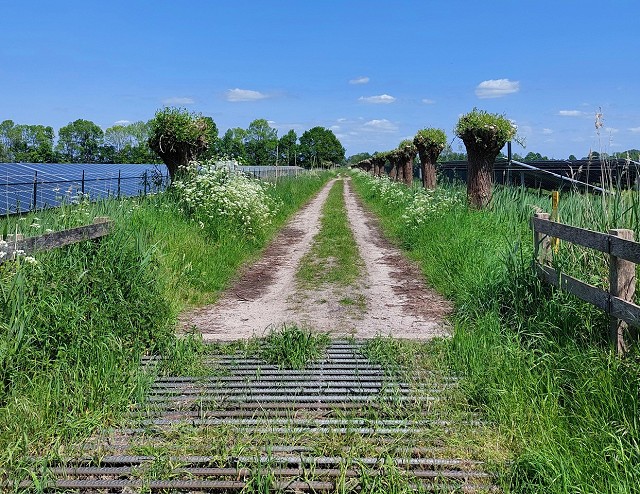
Of course, there are also challenges. Besides practical challenges such as bird droppings on your panels, there are also social challenges. Wind and solar parks sometimes evoke resistance. This is because they are more visible than fossil alternatives that are more often centered on industrial sites and ports. Renewable energy parks are often located on former agricultural land. In an open landscape, this is noticeable and it sometimes takes some getting used to. But a renewable energy park has the potential not only to provide green power but also to actually improve the environment and perception of the area, which can also improve support. Careful landscaping can do much to promote acceptance of the park while helping nature. Consider a wooded bank around the wind or solar park, or agricultural soil that recovers after years of monoculture because of the cessation of intensive use.
By designing wind and solar parks with biodiversity in mind and involving the environment, we can not only generate green power and create habitats for plants and animals, but it can also help increase social acceptance.”
Are you curious to know exactly how we do this? Then read on below.
An ecological pyramid among solar panels
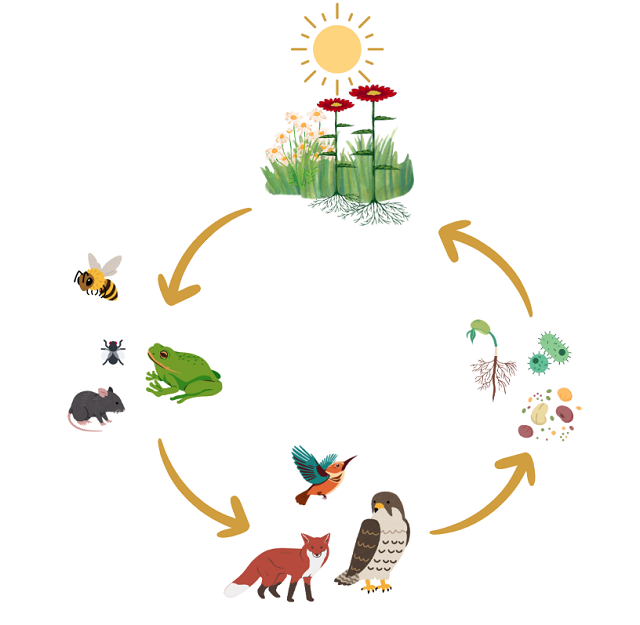
“The ecosystem in which the energy plant stands must be given room to flourish, to become healthy(er). This requires a good coordination of all ingredients. It starts with a healthy soil life, made possible in part by good water management and sufficient light penetration. This creates a solid foundation on which smaller organisms, such as fungi and insects, can develop. This then attracts larger predators, which in turn contribute to the regulation and further enrichment of the ecosystem. This sets in motion a process whereby each layer of the ecological pyramid influences the next, ultimately creating a resilient and self-sustaining ecosystem. In ecology, this is called the trophic cascade.
Design principles of a nature-inclusive energy park
In nature-inclusive design, there are several ways in which you can stimulate this trophic cascade. We distinguish four design principles:
- Design choices and technology, consider a wide arrangement of solar panels and panels that allow more light through.
- Biodiversity measures, such as creating flowery edges, vegetation between panels, soil improvement measures, pools for amphibians or nesting sites for birds.
- Water management, such as establishing waterways that can serve as habitat and support native vegetation.
- Vegetation management by mowing and pruning.
Design choices and technology
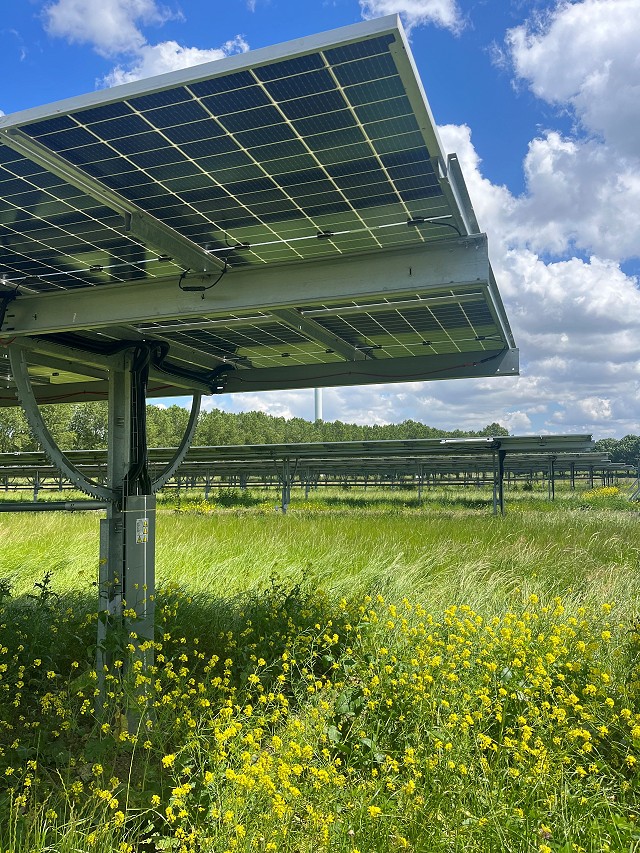
It all starts with good design. We like to work with local parties, landscape architects and ecologists to map the existing and surrounding nature and see how our energy parks can enhance this nature value. In terms of technology, we choose a setup where the yield of the park is still profitable and where we simultaneously take into account the restoration of the surrounding nature. Fortunately, technology has now reached the point where, in the case of solar panels, for example, we can use translucent and bi-facial panels to generate more and more energy, creating more space for soil life, plants and animals. These techniques will only become more efficient in the future, increasing the success of energy parks.
Biodiversity measures
In the design, we are looking at measures to encourage biodiversity. Again, we do this in consultation with ecologists and local nature organizations. They know the area well and often know best what is needed. Think about restoring the soil and introducing native vegetation. Or vegetation aimed at attracting certain insects and/or pollinators. We also provide sufficient habitat such as nesting boxes for birds or pools for frogs. For example, at Wind Farm Krammer we have even created new islands and nesting areas to support nesting birds there, and we also take into account bird migration routes in the design. Where possible, we equip our wind farms with an advanced bird detection system where wind turbines automatically stop if a bird flies too close. So exactly which measures we choose depends on local nature needs.
Management
Studies by Wageningen University and Groningen University clearly showed that management has one of the greatest influences on biodiversity in nature-inclusive energy parks. Consider mowing, at the right time and in the right amount, but also water management. For example, solar panels have the not often mentioned and untapped advantage of capturing a lot of rainwater. By making clever use of this, you can replenish groundwater levels and restore dried-up ditches and creeks.
All these measures only become meaningful the moment you see what it actually does. That is why it is also important to monitor nature in the renewable energy park. By monitoring, there is room to make adjustments and learn lessons from the design. So a very important part that should definitely not be missed.”
Curious about real-life stories on design, management and monitoring? Read more about them in the next blog. Anna talks about this with Senne Koetsier, from team Asset Management and Tijmen Keesmaat, co-founder of GreenTrust Consultancy and developer at heart.
The key to a sustainable future
“Nature-inclusive solar and wind farms offer numerous ecological, social and economic benefits. They enable double use of space, create new natural areas, provide better landscaping and improve local biodiversity. By making conscious use of the space in these parks, new habitats for various animal species are created and the surrounding nature is expanded and strengthened. In addition, nature-inclusive parks make the surrounding area more attractive, enhancing the experience and sometimes even providing space for recreation, such as hiking trails.
While generating renewable energy remains the primary goal, thanks to nature-inclusive design, these projects ensure that energy production does not come at the expense of our natural resources. This is the key to a future where energy generation and nature go hand in hand. Together with the environment, we thus contribute to a sustainable future and a thriving biodiversity.”
In the next blog, Anna will elaborate on the importance and impact of nature-inclusive measures in practice. So keep following GreenTrust. Of course, we are also curious to hear your thoughts on nature-inclusive development. We would love to engage with you!
Team
Meet the GreenTrusters behind this news

Projects
This news covers the following project