Innovation underground: Cable pooling at BCT relieves grid congestion
In conversation with project manager Christian Holdert
Imagine you live in cozy Breda and decide to spontaneously take a day trip to Antwerp, just an hour away, to enjoy an authentic Belgian waffle. On your way there you pass BCT’s business park, and so you decide to take an employee from Breda who needs to go to the office. On the way back, you pick her up again with a waffle for the car. A small five-minute detour and voilà, you’ve done carpooling: efficient and fun.
This concept of “sharing together” can also be applied underground, this is called cable pooling. The electricity cable network is becoming overloaded in more and more places in the Netherlands (grid congestion), causing new requests for a connection or extension to the grid to take longer or be rejected for the time being. To be smart about this, cable pooling can be an option.
For example, the floating solar panels at Business Centre Treeport (BCT) needed space on the grid to dispose of their generated energy. Instead of building an entirely new connection, these solar panels can use the existing infrastructure of the wind turbines on the same site. The turbines have a fixed transmission capacity but do not always use the full capacity, leaving room for an additional cable connecting the solar panels to the existing purchasing station(the power house).
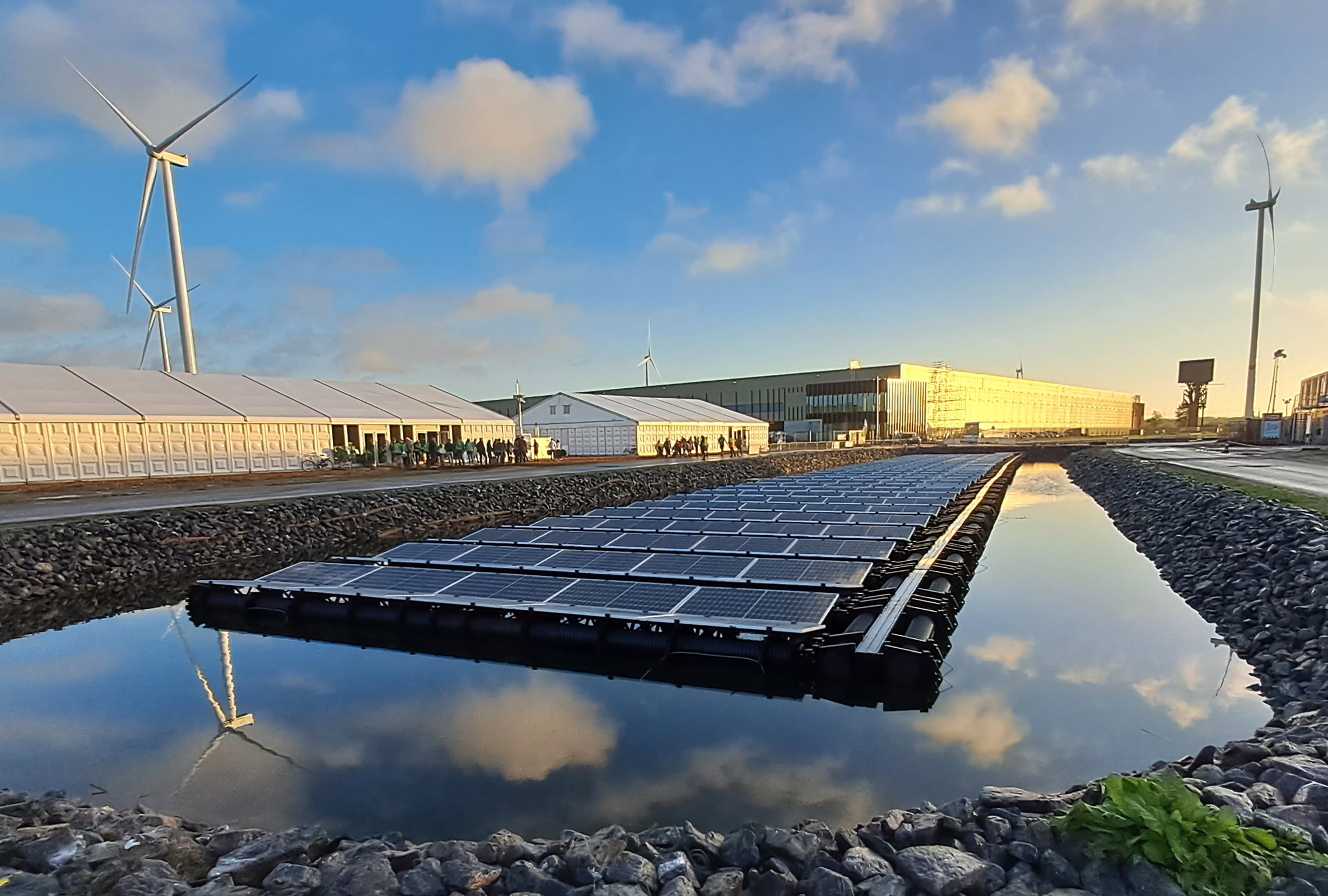
Through this type of partnership and sharing of existing cable infrastructure, parking operators can realize significant time and possible savings in terms of cabling and installation. Thus, cable pooling not only contributes to efficient grid use, but also improves the economic viability of renewable energy projects.
Christian Holdert, project manager at GreenTrust, helped BCT realize this connection by, for example, organizing the connection contracts and an energy management system that ensures that the maximum transmission capacity is not exceeded. ‘In practice, the wind and solar farm will not often run at peak power at the same time, but the grid operator had no additional capacity available therefore we regulate solar farm back in the exceptional case that too much power threatens to enter the grid,’ Christian says with a smile. ‘We also installed another new transformer in cooperation with the partners and contractors. The wind turbines operate at a much higher voltage level than the solar farm, and with the transformer we were still able to make the connection possible. Most projects are all slightly different, so cable pooling is a really fun puzzle to create. It really is a congestion management solution, so we are helping to relieve the current overload on the grid. How great is that?