From a coffee shop to a sustainable energy company
“Just go ahead and build that thing.” Back then (2015), Lieuwe couldn’t have known that those few words would, twelve years later, grow into a company with sixty colleagues both at home and abroad. And no, this story isn’t about GreenTrust, but about Volta Energy: the developer of sustainable solar power generators.
“On my way to school, I would always pass fields where diesel generators were roaring, even when no work was being done,” says Roel Bleumer, founder of Volta Energy. “There has to be a better way, I thought at the time. So, as part of my mechanical engineering program, I drew a design for a solar panel mounted on a trailer. During a career fair, I decided to present my idea.”
As it happened, Klaas and Lieuwe from GreenTrust were there that day. Roel got to talking with Lieuwe about a familiar pain point: even at wind farm opening ceremonies, a diesel generator sometimes had to be set up to provide electricity for things like the coffee machine. “That was indeed a bit of an embarrassing issue,” Lieuwe laughs. “But that’s exactly why I was immediately intrigued. After all, how logical would it be if we could power our own opening ceremonies with green energy? Of course, we would have preferred to use electricity directly from the turbines, but unfortunately, it’s not that easy to just plug something in there.”
After the meeting, Roel—then a 19-year-old student—was invited to GreenTrust’s break room. There, he heard the words that set everything in motion: “Go ahead and build that thing.”
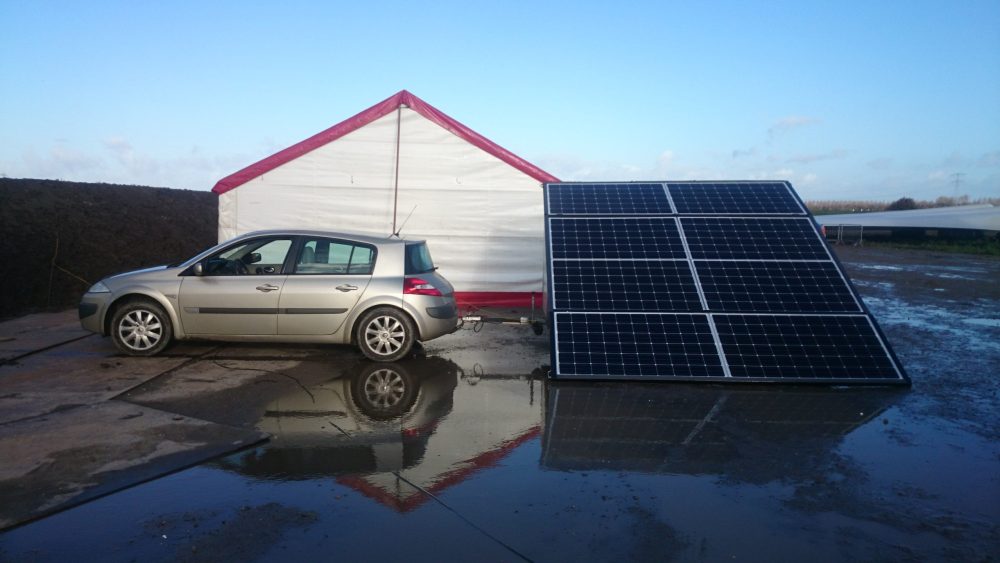
GreenTrust covered the cost of the materials, after which Roel had the parts delivered to his parents’ shed. There, he welded together the very first prototype of Volta. “The first test was scheduled to take place during an opening party at Windpark Roosendaal,” Roel says proudly. “After that, GreenTrust would be able to rent the solar power unit for other events. I have to admit, though, that the solar panels cracked on the way to Roosendaal. Apparently, you can’t just transport glass solar panels on the highway. But it worked. The coffee machine and other important components could be plugged in just fine during the opening. That was truly the official launch of Volta.”
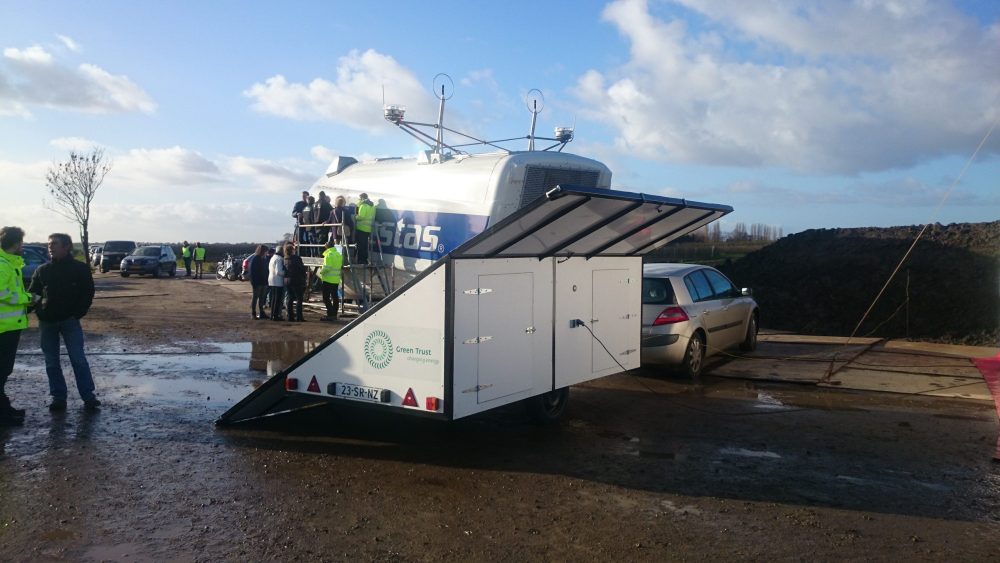
That first project immediately yielded valuable lessons. What worked? What could be improved? What can you actually transport? And how do you make a sustainable alternative to a diesel generator that’s also practical, reliable, and scalable? In the years that followed, there was hard work, lots of testing, and just as much laughter. Volta developed various models: foldable, with or without a trailer, battery-powered, and motor-driven. “This year, we built our 500th Volta,” says Roel. “We now have models ranging from 6 to 120 kVA. Our systems are hybrid, which means they only kick in when electricity is actually needed. That saves a tremendous amount of energy.”
For Lieuwe, it’s great to see how an idea from a student presentation has grown into a fully-fledged company. “This is exactly what the energy transition is all about: just getting started, testing, improving, and scaling up. It’s great that GreenTrust was able to contribute to this development from the very beginning. And it’s even more wonderful to see everything Volta Energy has achieved since then.”
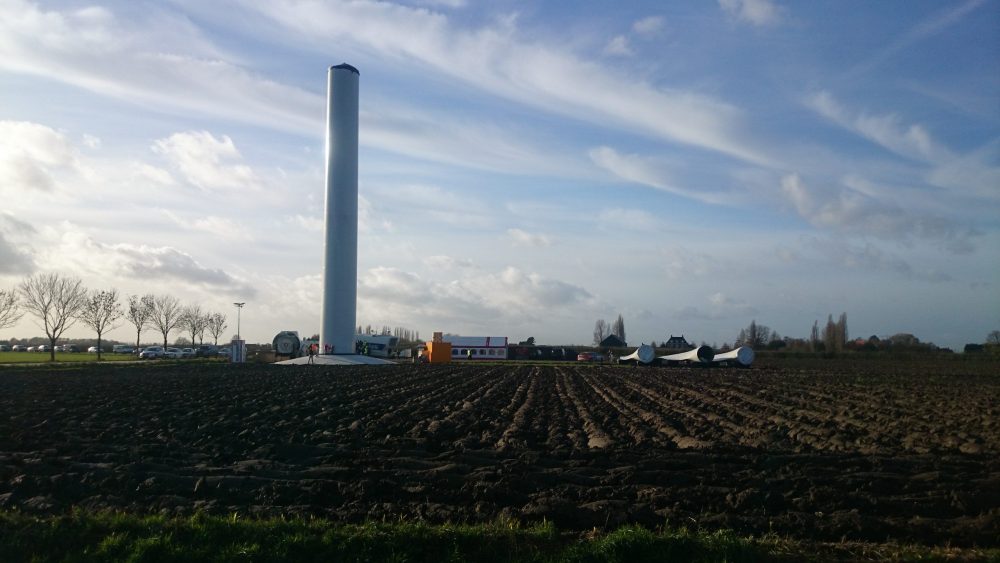
Volta Energy has a clear goal: to replace diesel generators in the Netherlands with sustainable alternatives as much as possible. It’s a goal we’re happy to help achieve. So, are you looking for a generator for a construction site, a project location, or an event? Then be sure to consider Volta.
The existing grid connection is not large enough to accommodate that growth. GreenTrust was therefore commissioned by Recreatiepark de Leistert and the Zuidenwind and Leudal Energie cooperatives to investigate whether nearby wind farms could help ensure that De Leistert continues to have a sufficient power supply in the future.
Team
Meet the GreenTrusters behind this news