Swept-path analysis
We’ll get your energy project off the ground safely
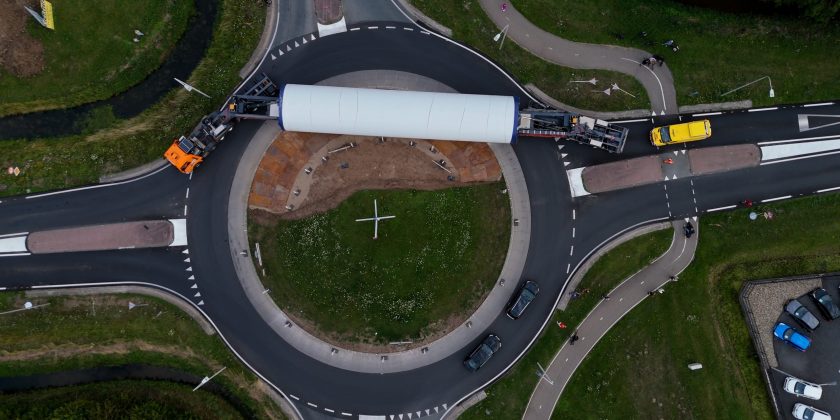
When developing wind, solar, and energy storage projects, accessibility is an essential component of feasibility. Large shipments, crane setups, and construction logistics require sufficient space, smart routes, and thorough preparation. Using a swept path analysis, GreenTrust determines whether vehicles, oversized loads, and heavy equipment can move safely and efficiently across the site and along the intended access routes.
This way, you’ll know early on where the opportunities, risks, and challenges lie. Consider tight turns, temporary modifications to roads or shoulders, obstacles, height restrictions, turning radii, staging areas, and potential points of contact with landowners, road authorities, or the surrounding community.
Understanding Accessibility and Buildability
Good design starts with the question: Will we actually be able to get there?
Using a swept path analysis, we simulate the driving movements of vehicles and transport combinations within your project area. We examine, among other things, the delivery of turbine components, transformers, battery containers, solar panels, cranes, and other heavy or long equipment. In doing so, we analyze whether the available space is sufficient and where adjustments are needed.
The analysis helps support design decisions, the permitting process, consultations with stakeholders, and preparation for the construction phase. This helps you avoid surprises later in the project.
What We Investigate
GreenTrust creates the necessary driving curves, route analyses, and drawings based on available map data, design drawings, and, where necessary, topographic information. We don’t just look at the route on paper, but also at its practical feasibility in the surrounding environment.
Among other things, we assess the following:
- turning circles and turning radii of relevant vehicles;
- space required for special-purpose transport and heavy equipment;
- potential bottlenecks at curves, intersections, driveways, and access roads;
- points of contact with road shoulders, ditches, fences, trees, street furniture, and other obstacles;
- temporary or permanent modifications to roads, curves, or staging areas;
- Points to consider regarding crane platforms, construction roads, and logistics routes;
possible restrictions in height, width, or maneuvering space.
From Initial Feasibility to Implementation
Swept path analysis is valuable in various phases of an energy project. In the early feasibility phase, the analysis helps determine whether a location is practically accessible. During the design and permitting phases, the analysis provides a basis for discussions with municipalities, provinces, road authorities, landowners, and other stakeholders. As the project moves toward implementation, the analysis serves as a practical foundation for transportation planning, construction logistics, and any necessary route adjustments.
We can use swept path analysis for:
- wind farms and turbine components;
- solar parks and construction logistics;
- battery storage and transformer shipments;
- access roads, construction roads, and crane sites;
- redevelopment or expansion of existing energy projects;
- Temporary routes and work sites during the construction phase.
Practical, clear, and applicable
Our approach focuses on practical results. It’s not a theoretical exercise, but rather clear drawings, videos, and recommendations that you can use to move forward. We combine technical analysis with project experience in renewable energy. As a result, we look not only at vehicle movement itself, but also at the impact on planning, permits, the surrounding area, costs, and feasibility.
You will receive a clear overview of the routes studied, the main bottlenecks, and possible solutions. Where necessary, we will translate this into design modifications, guidelines for permit applications, or input for discussions with transport companies, contractors, and the competent authorities.
Feasibility Team
The pioneers of a green future
Projects
We aim for impact. That’s what makes the difference.




Cooperative wind park A2 Lage Rooijen
Since 2017, Cooperation Bommelerwaar and GreenTrust have been working on a cooperative wind park at Lage Rooijen, directly east of the A2 motorway. In January 2026, the three turbines will be officially completed. With the three wind turbines, the park will then generate enough local green energy for about 10,000 households. And is thus booster of a sustainable municipality of Maasdriel.



Wind park Kroningswind
Kroningswind is an initiative of eleven farming families on the island of Goeree-Overflakkee in South Holland. 19 wind turbines have been built with a combined capacity between 70-80MW.




VE Lički Medvjed
In the mountains of Otočac, Croatia, GreenTrust wants to develop the largest wind farm in Croatia. In a nature-inclusive and social way, so that nature and the environment benefit. In addition to feasibility, development and technical design, communication is key here.
News
Everything you wanted to know about new energy
 26 August 2026
Smart accessibility starts with a swept path analysis


